Projects
COOPTREE
Diversification, valorisation and adaptation of the South-West European forest to climate change.
Start date: 01/01/2024
End Date: 31/12/2026
 Manel Niell
 Marta Domènech
 Ot Pasques
Work strands:
Global change
Flora
Forest resources
Flora
Forest resources
Financing program:
Interreg Sudoe

COOPTREE is a cross-border collaboration project that seeks to create a knowledge base and experience-sharing framework for the adaptation of forests to climate change and droughts. To this end, it integrates forest diversity, adaptive silviculture and the valorisation of forest products.
The adaptive potential of forests to climate change must integrate forest diversity and ecosystem functions, close-to-nature silviculture and the generation of products along the commercial value chain, within a framework of economic and environmental sustainability. This is not a challenge, but an obligation in order to adapt forests to global change.
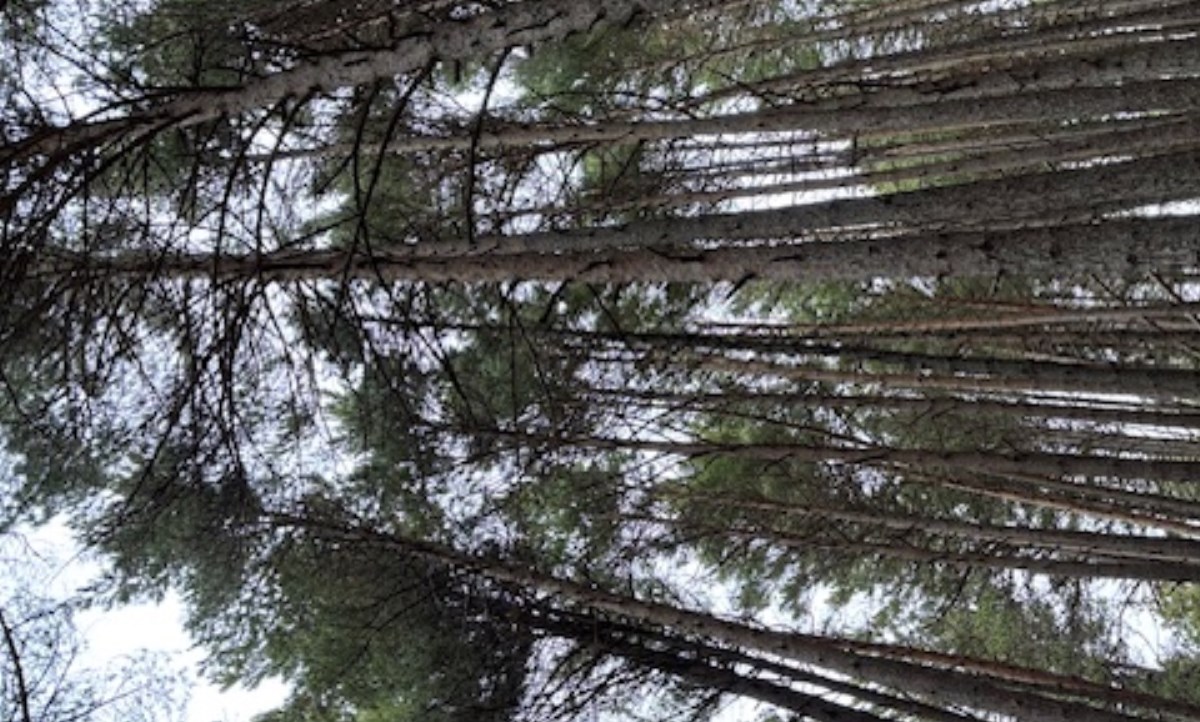
Forest ecosystems are increasingly threatened by global warming. This is particularly true of forests in south-western Europe, where the level of uncertainty about the effects of global warming and droughts on forests is high. In this context, managers, foresters and policymakers need baseline information to be able to anticipate and adapt forests to this new context of uncertainty.
This project works on improving forest resilience through the genetic diversity of forest species, carrying out various experiments, as well as gathering information for the conservation of genetic resources in south-western Europe. The experiments are aimed at evaluating some of the natural hybridisations of forest species using a common transnational method. They will also serve to improve the state of knowledge on drought resistance in certain tree species, such as Scots pine.
The project also encompasses the implementation of pilot experiences in close-to-nature adaptive silviculture that make it possible to make use of resources extracted from the forest by integrating them into the short-circuit value chain, thereby improving forest resilience. In the case of Andorra, this commitment has translated into the establishment of a pilot trial covering 3 hectares of forest at Beixalís, built around two main premises: (1) improving the ecological resilience of the forest and (2) increasing its species diversity through the use of native tree species. Accordingly, a selective thinning has been carried out within this project to ensure long-term resilience, combined with the creation of three plots where 600 saplings of 6 native tree species have been planted (i.e., Betula pendula, Fraxinus excelsior, Quercus pubescens, Quercus petraea, Quercus ilex and Salix caprea) in order to begin monitoring the physiological acclimatisation of each species over the coming years.
This project is being carried out in collaboration with the Comú de la Massana.