
AR+I and the Red Cross Launch a Pilot Project to Improve the Rehabilitation Process for Day Centre Users
AR+I and the Red Cross Launch a Pilot Project to Improve the Rehabilitation Process for Day Centre Users
The tool, developed by the start-up Muvity, is a concrete example of how the Andorra Living Lab enables innovative solutions to be tested in real-world environments
Andorra Research and Innovation (AR+I) has launched a pilot project that will support users of Red Cross day centres throughout their rehabilitation process through an innovative system developed by the start-up Muvity. This initiative represents the implementation of one of the two winning projects from the first edition of the Andorra Living Lab Challenge, held last year as part of the Andorra Living Lab programme.
The pilot project is a tangible example of how the Andorra Living Lab connects start-ups, institutions, professionals and end users to validate innovative solutions in real-world settings. It further strengthens AR+I’s role as a facilitator of innovation in Andorra by promoting open innovation mechanisms that help identify, attract and validate technologies with the potential to generate a positive impact in the country.
Over the next six months, the four Red Cross day centres — CENCRA in Andorra la Vella, Paraires in Escaldes-Engordany, Valls del Nord in La Massana and Centre Major in Sant Julià de Lòria — will have access to the platform to assess whether the solution improves users’ health outcomes throughout the rehabilitation process. The objective is to validate the solution in a real-life context, analyse its impact and explore its scalability and future implementation within the Andorran ecosystem. In this regard, the Red Cross acts as a strategic partner, contributing healthcare expertise, professional supervision and access to a real-world validation environment.
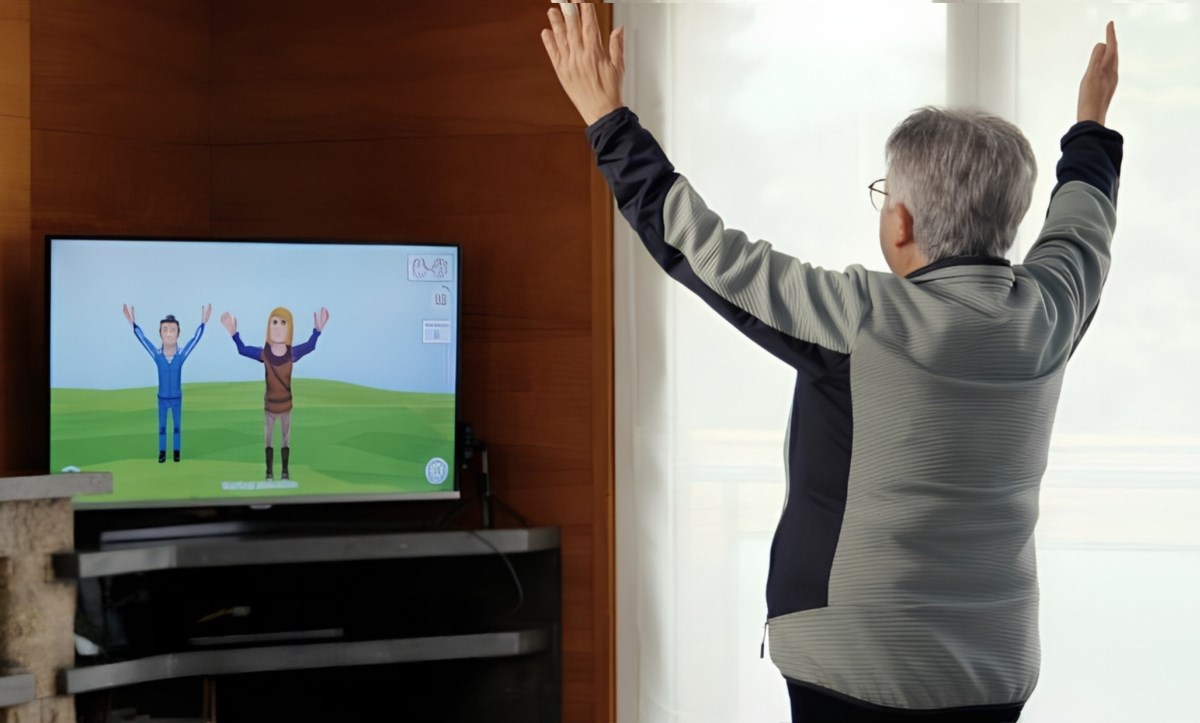
The remote physiotherapy tool uses gamification to make rehabilitation exercises more engaging and user-friendly. This approach also allows rehabilitation sessions to become more social experiences, as fellow users can accompany and encourage participants during their exercises, as has already been demonstrated in previous pilots conducted in Catalonia. By transforming rehabilitation into a shared and supportive activity, the solution aims to reduce therapy abandonment rates and provide additional emotional support to users. All day centre users requiring rehabilitation therapy will be eligible to participate in the pilot, while the Red Cross will design personalised exercise programmes for each participant based on the recommendations of its rehabilitation specialists.
The pilot project will provide real-world, objective data on how this solution can improve the quality of life of older adults, while also helping to assess its scalability and long-term potential.
Commitment to the National Innovation and Economic Diversification Plan
Through initiatives such as this pilot project, AR+I contributes to the implementation of the National Innovation and Economic Diversification Plan presented by the Government of Andorra in autumn 2025. One of the plan’s priorities is identifying and addressing key societal challenges, including population ageing, while ensuring that older adults can enjoy the highest possible quality of life.
About Muvity
Muvity is a start-up and spin-off from the Polytechnic University of Catalonia (UPC) and was the winner of the Healthy Ageing Challenge in the first edition of the Andorra Living Lab Challenge 2025. The company has developed a telerehabilitation platform based on artificial vision technology and gamification techniques designed to improve adherence to rehabilitation treatments.
The challenge successfully identified several technological solutions focused on improving quality of life, sustainability and social inclusion. Within this context, the evaluation committee selected Muvity as the winning start-up in the Healthy Ageing category due to its innovative proposal aimed at promoting autonomy, well-being and physical activity among older adults through digital tools and rehabilitation and monitoring methodologies tested in real-world environments.